
Устойчивое развитие пребиотического функционального ингредиента из отработанной кофейной гущи с использованием ультразвуковой обработки при помощи ферментов
Устойчивое развитие пребиотического функционального ингредиента из отработанной кофейной гущи с использованием ультразвуковой обработки при помощи ферментов

Аннотация
В данном исследовании рассматривается возможность вторичной переработки отработанной кофейной гущи (ОКГ) в функциональный пребиотический ингредиент, что позволяет решить как проблему сокращения объема отходов, так и задачу разработки биоактивных соединений с добавленной стоимостью. ОКГ, богатая антиоксидантами и пищевыми волокнами, зачастую выбрасывается, что приводит к загрязнению окружающей среды. Мы разработали экологически устойчивый процесс преобразования ОКГ в функциональный пребиотический ингредиент с помощью различных методов обработки, включая обработку ультразвуком и ферментативный гидролиз (с использованием Pentopan Mono BG и Celluclast BG). Обработанные образцы ОКГ были проанализированы на содержание фенольных соединений и флавоноидов, антиоксидантную активность, концентрацию углеводов и пребиотический потенциал. Наибольшее содержание фенольных соединений (3,63±0,05 мг/г GAE) наблюдалось в ОКГ, обработанном ультразвуком и Pentopan Mono BG, тогда как при использовании только ультразвука было получено самое низкое значение (0,99±0,04 мг/г). Содержание флавоноидов достигло максимального значения при комбинированной обработке с использованием как ферментов, так и ультразвука (35,8± 6,8 мг/л QE). Антиоксидантная активность была наиболее выраженной в ОКГ, обработанной ультразвуком (87,52±0,9%). Концентрации углеводов и восстанавливающих сахаров были наивысшими в ОКГ, обработанной как ферментами, так и ультразвуком (38,5 ± 0,4 мг/л и 11,8 ± 0,9 мг/л соответственно). Анализы роста микроорганизмов показали, что экстракты ОКГ способствуют росту пробиотиков, причем наибольшее количество КОЕ/мл (19,2±5,8 × 10⁸) наблюдалось в образце, обработанном комбинацией ферментов. Эксперименты по гидролизу показали низкую степень распада (0,18±0,2%) в условиях, имитирующих желудочную среду, что подтверждает устойчивость ОКГ к пищеварительным процессам и ее потенциал в качестве пребиотика, действующего в толстой кишке. Данные результаты подчеркивают эффективность обработки ферментами и ультразвуком в плане усиления биологически активных свойств ОКГ, что позволяет позиционировать ее как экологически устойчивый функциональный ингредиент, способствующий укреплению здоровья.
1. Introduction
Coffee is the second most traded commodity in the world after petroleum , with 170.3 million 60-kg bags consumed worldwide in 2021–2022 and 12 million tons expected by 2030 . Nonetheless, a significant amount of spent coffee grounds (SCG) is produced during the coffee processing process; roughly 650 kg of SCG are produced for every ton of green coffee beans and 2 kg of wet SCG are produced for every kilogram of instant coffee , , . An estimated 18 million wet tons of SCG were disposed of globally in 2021 , frequently in landfills, which put methane emissions and spontaneous combustion at risk . SCG are excellent for prebiotic extraction because they are high in phenolics, dietary fiber (50 percent dry weight) , and indigestible polysaccharides (such as galactomannans and arabinogalactans). SCG-derived oligosaccharides, such as MOS and XOS, exhibit superior efficacy at lower doses (1–4 g/day) in comparison to conventional prebiotics (e.g., inulin, FOS), with advantages for pathogen suppression, metabolic regulation, and gut health . Spent coffee grounds were selected as a potential source of prebiotic oligosaccharides. Some coffee by-products have been shown to meet prebiotic needs .
Recent research has shown that oligosaccharides extracted from spent green coffee may encourage the development of helpful bacteria and are resistant to artificial human gastric juice . The demand for synbiotic functional foods , is met by these compounds, which withstand gastric digestion and enter the colon to selectively stimulate probiotics such as lactic acid bacteria (LAB) , , . Recent research indicates that several non-carbohydrate substances, including phenolic compounds, carotenoids, polyunsaturated fatty acids, and vitamins, may possess prebiotic qualities by selectively promoting good bacteria and reducing the occurrence of illness . Gut microbiota fermentation of these prebiotics leads to the production of short-chain fatty acids (SCFAs) such as lactic acid, butyric acid, and propionic acid. These SCFAs exert pleiotropic effects within the host. Propionic acid, for example, demonstrates immunomodulatory properties by influencing T helper 2 cells in the airways, macrophages, and dendritic cells within the bone marrow , .
This study focuses on valorizing spent coffee grounds (SCG) by optimizing enzymatic treatments and ultrasonic methods to recover bioactive compounds and enhance prebiotic functionality. It presents a sustainable approach for upcycling coffee byproducts in the circular bioeconomy, transforming waste into beneficial ingredients for gut health, while contributing to the production of value-added functional products through targeted enzymatic saccharification of SCG-derived polysaccharides. Enzymatic hydrolysis offers a better option than harsh chemical methods by applying gentle, highly specific conditions that enhance fermentable sugar production and reduce energy expenses . The decomposition of lignocellulosic polysaccharides is facilitated by glycoside hydrolases (GHs). Owing to the natural resistance of complex biomass, thorough saccharification necessitates the collaborative functioning of various GHs, a varied set of enzymes systematically categorized by family and subfamily in the Carbohydrate-Active enZYmes (CAZy) . Specifically, we report the application of selected commercial enzymes—Celluclast (a multicomponent cellulase cocktail comprising endoglucanases, exoglucanases, and β-glucosidases to hydrolyze cellulose) and Pentopan Mono BG (a hemicellulolytic preparation primarily containing endo-1,4-β-xylanase to cleave the xylan backbone of hemicellulose)—to depolymerize the SCG matrix efficiently.
Following mild pretreatment to enhance enzyme accessibility while minimizing structural saccharide loss, these targeted enzymatic cocktails were successfully used to produce prebiotic oligosaccharides in an eco-friendly manner. The biological value of these SCG-derived prebiotics was subsequently validated through in vitro growth assays on probiotic bacterial strains. In line with the growing interest in the valorization of agro-industrial byproducts and the development of sustainable functional ingredients, the purpose of this study was to develop and optimise a sustainable strategy for the valorisation of spent coffee grounds (SCG) by applying ultrasonication and targeted enzymatic hydrolysis to enhance the release of bioactive compounds and generate prebiotic oligosaccharides. Specifically, the study aimed to evaluate the effects of these treatments on the chemical composition, antioxidant activity, and carbohydrate profile of SCG, and to assess their resistance to gastrointestinal digestion and their ability to stimulate the growth of probiotic microorganisms. Ultimately, the research seeks to demonstrate the potential of SCG as a functional, colon-targeted prebiotic ingredient within a circular bioeconomy framework.
2. Materials and methods
2.1. Source of the materials
Spent coffee grounds were obtained from the Burger King restaurant. All other reagents and glassware were obtained from the faculty of biotechnologies, ITMO University, Saint Petersburg, Russia.
2.1.1. Reagents and material
50mM Sodium Citrate buffer, SCGs, Pentopan Mono BG, Celluclast BG, Folin-Ciocalteu solution, Sodium carbonate, Gallic Acid, DPPH (2,2-diphenyl-1-picrylhydrazyl) 0.1mM, Ethanol, Aluminum chloride, Potassium acetate, Quercetin, Sulfuric acid, Phenol, Glucose, Benedict's reagent (Sodium carbonate, sodium citrate, and copper (II) sulfate pentahydrate), Peptone, Yeast extract, Glucose, Potassium phosphate dibasic, Sodium acetate trihydrate, Tri ammonium citrate, Manganese sulfate mono hydrate, Magnesium sulfate heptahydrate, Tween 80, Inulin, Agar, SCG extracts, Lactobacillus rhamnosus GG, NaCl, KCl, Na2HPO4·2H2O, NaHPO4, CaCl2·2H2O, MgCl2·6H2O.
2.2. Pretreatment of spent coffee grounds
Spent coffee grounds were pretreated according to the protocol given by with some modifications.
2.2.1. Drying and moisture content measurement of spent coffee grounds
Firstly, the moisture content of freshly collected spent coffee grounds was measured by placing 1g of spent coffee grounds and heating it at 150°C using a Shimadzu moisture balance MOC-120H (Japan). After that, for further process 500g of spent coffee grounds were dried using a Hot-air Binder FD-23 dryer oven (Germany) at 40°C for 24 h. After drying, the moisture content of dried spent coffee grounds was measured by placing 1g of spent coffee grounds and heating it at 150°C using a Shimadzu moisture balance MOC-120H (Japan). The dried spent coffee grounds were stored in airtight plastic container to prevent moisture reabsorption by spent coffee grounds.
2.2.2. Defatting of spent coffee grounds
The dehydrated SCGs were defatted using the Soxhlet extractor apparatus. 50 g of dehydrated spent coffee grounds (SCGs) were subjected to defatting using 250 ml of organic and highly volatile solvent n-hexane for 12 cycles of extraction. The defatting process was carried out at 69°C until the solvent in the Soxhlet siphon became colorless. Following the completion of the extraction, the solvent was separated using a rotary evaporator. Then, the defatted SCGs were dried overnight under a fume hood at room temperature (28 ℃) and further dried in an oven at 60 ℃ for 1 h until constant weight was reached. The defatted SCG’s were ground at 3500rpm for 5 minutes. The samples were kept in a polyethylene zip-lock bag and stored at room temperature for further analyses.
2.3. Extraction of oligosaccharides from spent coffee grounds
For effective extraction of oligosaccharides from spent coffee grounds, a combination of ultrasonication treatment and enzyme hydrolysis with Pentopan Mono BG (Xylanase),Celluclast (Cellulase) enzymes and the combination of the two enzymes was used.
Different experimental treatment designs
Sample | Treatment Method | Enzyme(s) | Biochemical Classification / Components |
1 | Ultrasonication only | None | N/A (Physical Pretreatment) |
2 | Ultrasonication + Enzymatic | Celluclast BG | Cellulase (primarily endo-glucanase, cellobiohydrolase, and β-glucosidase) |
3 | Ultrasonication + Enzymatic | Pentopan Mono BG | Xylanase (endo-1,4-β-xylanase) |
4 | Ultrasonication + Enzymatic | Celluclast BG & Pentopan Mono BG | Cellulase & Xylanase complex |
2.3.1. Ultrasound-assisted extraction of oligosaccharides
The Ultrasound treatment was designed based on previous research done by , with some modifications. 50g of SCG and 250 mL of 50 mM Sodium citrate buffer, pH 5.0, without enzyme. This mixture was treated with ultrasonication at 40°C for 10 minutes with 60% of 165 W amplitude in an ultrasonication bath (Grad, Russia). This process was repeated four times for further experimental process.
2.3.2. Enzymatic hydrolysis treatment of ultrasonication-treated SCG samples
The Enzymatic hydrolysis of SCG was done according to , with some modifications.
In the first experimental design, after ultrasonication treatment, the sample with 50g of SCG and 250 mL of 50 mM Sodium citrate buffer pH 5.0, without enzyme, was placed in a water bath in a glass container at a temperature of 50°C for a duration of 13 hours with a steady shaking speed of 150 revolutions per minute using Eurostar 20 digital rotator (Germany). Subsequently, the temperature was raised to 90°C for a period of 15 minutes. The sample was cooled down and centrifuged at 9700rpm for 15 minutes using SIGMA 3-16L Centrifuge (Germany). Supernatant was collected and filtered using SUPELCO nylon 66 membrane 0.45 μm filters (USA), and filtrate extract was stored at 4°C for further experiments. This sample was considered the control.
In the second experimental design, after ultrasonication treatment, the sample with 50g of SCG and 250 mL of 50 mM Sodium citrate buffer pH 5.0, the process of enzymatic hydrolysis was started by adding 0.50g of Celluclast BG (Cellulases) in the reaction mixture and placing it in a water bath at a temperature of 50°C for a duration of 13 hours. The hydrolysis was performed with a steady shaking speed of 150 revolutions per minute using Eurostar 20 digital (Germany). Subsequently, the enzymes were inactivated at a temperature of 90°C for a period of 15 minutes. The sample was cooled down and centrifuged at 9700rpm for 15 minutes using SIGMA 3-16L Centrifuge (Germany). Supernatant was collected and filtered using SUPELCO nylon 66 membrane 0.45 μm filters (USA), and filtrate extract was stored at 4°C for further experiments. In the third experimental variation, post ultrasonication treatment, the sample with 50g of SCG was treated using 0.34g of Pentopan mono BG (xylanase endo-1, 4-) enzyme in the reaction mixture. In the fourth experimental design, post ultrasonication treatment, the sample with 50g of SCG was treated with a combination of 0.34g of Pentopan mono BG (xylanase endo-1, 4-) enzyme + 0.50g of Celluclast BG (Cellulases) in the reaction mixture, all other experimental conditions were same as the second experimental design.
2.4. Determination of total phenolics in extracts of SCG
The determination of total phenols in four different liquid extracts of spent coffee grounds was done according to the protocol given by with some modifications. The total phenolic content (TPC) of SCG extracts was quantified using the Folin-Ciocalteu (F-C) method, adapted for a 96-well microplate format. Briefly, 5 μL aliquots of each filtered extract were combined with 60 μL of 7.5% (w/v) sodium carbonate solution and 15 μL of F-C reagent. Following thorough mixing, 200 μL of deionized water was added. The reaction mixture was then incubated at 60°C for 5 minutes, followed by cooling to room temperature. Absorbance was measured at 700 nm using the SPECTROstar® Nano microplate spectrophotometer (Germany). The calibration curve was constructed using gallic acid standards starting from 200mg/L,400mg/L,600mg/L,800mg/L,1000 mg/L. Distilled water served as the blank. This experiment was conducted in triplicate. The gallic acid standard curve was used to find out the total phenolic concentration in the four different extracts of spent coffee grounds using the equation y = 0.0002x + 0.1377. The coefficient of determination R2 was 0. 986. The concentration was expressed in GAE mg/L.
2.5. Determination of antioxidant activity in extracts of SCG
The antioxidant activity in four extracts of spent coffee grounds was determined using the DPPH (2,2-diphenyl-1-picrylhydrazyl) assay according to the protocol of . DPPH was freshly prepared using 0.0039g and dissolved in 100ml ethanol and stored in the dark. The concentration of DPPH was 0.1mM. To a 96- well microplate, aliquots of 20μL of extracts and 280μL of 0.1mM DPPH/ethanol solution were added. In a well, 20μL of ethanol and then 280μL of 0.1mM DPPH/ethanol solution were added to be used as a control. The plates were incubated for 30 min in the dark, and absorbance was read at 517 nm in a SPECTROstar® Nano microplate spectrophotometer (Germany). The analysis was performed in triplicate for four different extracts of spent coffee grounds. The antioxidant activity of extracts was expressed as an inhibition percentage of DPPH radical and calculated from Equation 1:
2.6. Determination of flavonoids in extracts of SCG
The estimation of flavonoid content in spent coffee ground (SCG) extracts was performed using a previously reported colorimetric assay . A 96-well microplate was prepared by adding 30μL of each filtered extract. Following this, 90μL of ethanol, 6μL of aluminum chloride at 10% (w/v), 6μL of potassium acetate (1 mol/l), and 170μL of distilled water were added in a sequential manner to each extract sample. The samples were stored in the dark at ambient temperature for a duration of 30 minutes. After that, the absorbance of the mixture was measured at 415nm using the SPECTROstar® Nano microplate spectrophotometer (Germany). The experiment was conducted in triplicate. The calibration curve was constructed with a standard solution of quercetin (25, 50, 100, 150, 200 mg/l). The quercetin standard curve was used to find out the flavonoid’s concentration in the four different extracts of spent coffee grounds using the equation y = 0.0023x + 0.2595. The coefficient of determination R2 was 0.984. The concentration was expressed in QE mg/L.
2.7. Determination of total carbohydrate in extracts of SCG
To determine the concentration of total carbohydrates in the extracts, the phenol-sulfuric acid colorimetric method was used according to with some modifications. To start the reaction 80μL of extract was added to the test tube. After that, 1 ml of H2SO4 72% (w/w) was added, and finally 160μL of phenol 5% (w/w) was added to each extract. Further tubes containing the reaction mixture were heated at 100°C for 5 minutes and cooled down to 24 °C. The absorbance was measured at 490nm using the SPECTROstar® Nano microplate spectrophotometer (Germany). The calibration curve was constructed with a standard solution of glucose concentrations starting from 0.4mg/L,0.8mg/L,1.2mg/L,1.4mg/L,1.8mg/L up to 2.0mg/L. A glucose standard curve was used to find out the total carbohydrate concentration in the four different extracts of spent coffee grounds using the equation y = 0.0184x + 0.0568. The coefficient of determination R2 was 0.982.
2.8. Determination of reducing sugars in extracts of SCG
The determination of reducing sugar in the extracts was performed according to the protocol given by . In order to measure the reducing sugars, 0.5 mL of the sample was taken and added to 1 mL of Benedict’s reagent. Then, after it was mixed diligently and heated in a boiling water bath for 5 minutes. To separate the precipitate, the mix was centrifuged at 4000 g for 2 minutes using an Eppendorf 5453 Minispin Plus centrifuge (Germany). The precipitate was discarded, and the supernatant was diluted with a ratio of 1:5. The diluted supernatant was checked in BMG LABTECH’s SPECTRO Nano spectrophotometer at 740 nm. Using glucose as the standard, the absorbance at 740 nm was measured, and a calibration curve was created (0.2, 2, 6, 10 mg/mL). A glucose standard curve was used to find out the reducing sugar concentration in the four different extracts of spent coffee grounds using the equation y = 0.0782x + 0.9692. The coefficient of determination R2 was 0.988.
2.9. Evaluation of prebiotic activity of SCGs extracts
For the evaluation of the SGC extracts, a viable microbial count of the SGC extracts was done according to the protocol given by Alp Avci et al., 2017 with some modifications as shown in the table 2. The extracts from SCG and a reference prebiotic (inulin) were employed as a carbon source for the growth of probiotic strain Lactobacillus rhamnosus GG. Lactobacillus rhamnosus GG was inoculated and activated in MRS broth by incubating for 24 hours at 37°C. Further, 1 ml of this culture was inoculated in six different variants of MRS broths as shown in the table and incubated 24 hours at 37°C without any agitation. After this serial dilution of all different MRS broth cultures was done, it was inoculated on the MRS agar and incubated at 24 hours at 37°C to count the viable bacteria, bacterial colonies were counted and concentration was expressed in CFU/ml. The comparison of CFU/ml in different variants of MRS was done.
Composition of MRS broth and medium containing prebiotics
Components (g/250ml) | MRS+SCG extract Sample 1 (A) | MRS+SCG extract Sample 2 (B) | MRS+SCG extract Sample 3 (C) | MRS+SCG extract Sample 4 (D) | MRS+Inulin (E) | MRS Broth (F) |
Peptone | 2.5 | 2.5 | 2.5 | 2.5 | 2.5 | 2.5 |
Yeast extract | 1.25 | 1.25 | 1.25 | 1.25 | 1.25 | 1.25 |
Glucose | - | - | - | - | - | 5.0 |
Potassium phosphate Dibasic | 0.5 | 0.5 | 0.5 | 0.5 | 0.5 | 0.5 |
Sodium acetate .3 H2O | 1.25 | 1.25 | 1.25 | 1.25 | 1.25 | 1.25 |
Tri ammonium Citrate | 0.5 | 0.5 | 0.5 | 0.5 | 0.5 | 0.5 |
Manganese Sulfate. H2O | 0.0125 | 0.0125 | 0.0125 | 0.0125 | 0.0125 | 0.0125 |
Magnesium Sulfate. 7 H2O | 0.05 | 0.05 | 0.05 | 0.05 | 0.05 | 0.05 |
Tween80 (ml/250ml) | 0.25 | 0.25 | 0.25 | 0.25 | 0.25 | 0.25 |
Inulin, % | - | - | - | - | 5 | - |
SCG extracts, % | 5 | 5 | 5 | 5 | - | - |
2.10. Analysis of the degree of polymerization of oligosaccharides in samples
The following formula was used to determine the oligosaccharide polymerization degree.
2.11 Effect of artificial human gastric juice hydrolysis on carbohydrates
The effect of artificial human gastric juice hydrolysis was determined by following the protocol as described by with some modifications. Hydrochloric acid buffer (g/L=NaCl, 8; KCl, 0.2; Na2HPO4·2H2O, 8.25; NaHPO4, 14.35; CaCl2·2H2O, 0.1; MgCl2·6H2O, 0.18) was used to replicate human gastric juice. Using 5 M HCl, the buffer was brought to pH 1, 2, 3, 4, and 5. A 5 ml sample solution (10% v/v) was supplemented with a 5 ml HCL buffer at each pH. The sample was placed in a water bath and kept at a temperature of 37 ± 1 degrees Celsius for a duration of 6 hours. At consistent time intervals of 0.5, 1, 2, 4, and 6 hours, the mixture was collected and subjected to analysis in order to determine its concentration of reducing sugars. The reducing sugar content was determined according to and total sugar content was determined according to . The sample's hydrolysis percentage was estimated using the amount of reducing sugar liberated.
3. Results and discussion
3.1.1. Measurement of moisture content pre- and post-drying of SCGs
The moisture content of freshly collected spent coffee grounds (SCG) was 45.93 ± 5.2%. After drying 500 g of SCG at 40 °C for 24 h, the moisture content decreased to 2.2 ± 0.1%, and the final dry mass was 270.2 ± 26.19 g. These results are consistent with literature data: a moisture content of 46.76 ± 0.12% for wet SCG was reported in , while reported a moisture range of 38–48% for wet spent coffee grounds, which aligns well with the present findings.
3.1.2. Measurement of average defatting time and oil content in SCG
Defatting of dehydrated spent coffee grounds resulted in the recovery of 4.2 ± 0.95 g of coffee oil from 50 g of dry SCGs, corresponding to an oil yield of 8.48 ± 0.45% (w/w) based on the initial dry mass. These results are comparable with literature findings, where oil yields from spent coffee grounds have been reported to range from 8.60% to 15.28%, depending on extraction conditions and duration . Defatting of dehydrated spent coffee grounds (SCG) yielded coffee oil, and the recovery rate closely aligned with previously reported values. It was also strongly influenced by factors such as solvent polarity and particle size. Previous research indicates that SCG oil (SCGO) yields exhibit considerable variation depending on the solvent employed and the particle diameter (Dp); for example, hexane extractions produce 11.70 ± 0.29% at moderate diameters (425–500 µm) but decrease to 8.82 ± 0.91% at larger diameters (Dp = 603.6 µm) . The current study's yield of 8.48% is very similar to those of larger particle size extractions or the use of solvents that don't yield as much, like methanol (5.55–6.47%). The variation in results suggests that while moderate particle reduction makes it easier for solvents to get in, grinding the SCG into a very fine powder (<200 µm) probably causes a lot of particles to stick together and the bed to become more compact. This kind of physical clustering makes it very hard for solvents to percolate (channeling) and makes the solid-liquid contact area less effective, which lowers the overall extraction efficiency. These results show that there is a critical granulometry threshold for SCG oil recovery. This means that making things too small can actually slow down mass transfer instead of speeding it up.
3.1.3. SCGs particle size microscopic analysis post-grinding
The defatted spent coffee grounds exhibited an average particle size of 164 ± 0.4 µm, as determined by microscopic analysis and shown in the fig. 1. This value is slightly lower than those reported in the literature, where larger coffee grind particles were found to have sizes of approximately 180 ± 8 µm .
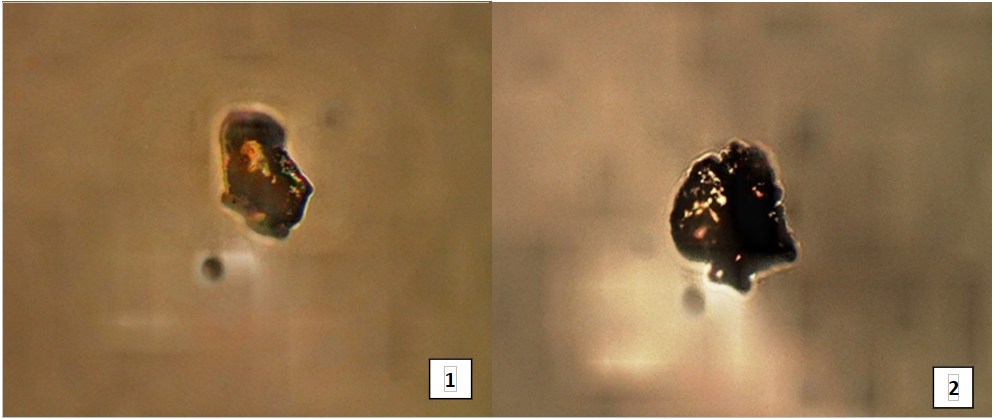
Microscopic analysis for SCG’s average particle size determination using 100X/0.8 (Micromed Polar-1)
the appearance of spent coffee ground particles was like a sponge with many pores
Statistical analysis demonstrated that ultrasonication and enzymatic hydrolysis were significantly more effective in extracting total phenolic content (TPC) than the other treatments (F = 1918.15, p < 0.001).The total phenolic compounds for samples are represented in the Fig. 2. Tukey’s post hoc test further confirmed that all treatments formed distinct statistical groups (p < 0.001). Sample 3 (Pentopan) yielded the highest TPC (3.63 ± 0.05 GAE mg/g), a 3.6-fold increase over the non-enzymatic Control (Sample 1; 0.99 ± 0.04mg/g)-proving that xylanase is effective in unlocking the phenolic ester of hemicellulose arabinoxylan side chains. Sample 2 (treated with Celluclast) too significantly enhanced extraction (2.79 ± 0.04 GAE mg/g) and degraded crystalline cellulose to enhance cell wall porosity, but yielded lower than Sample 3 (Pentopan), which suggests that hemicellulose is the main phenolic binding site in this substrate. Interestingly, Sample 4 (treated with Pentopan+Celluclast combo) had a strong antagonistic effect (2.38 ± 0.05 GAE mg/g), which had a lower TPC than the samples with a single enzyme. This abrupt decrease was probably due to a rapid and dual enzyme-structural collapse leading to aggregation, physically trapping the freed phenolics, or to the excessive exposure of these sensitive molecules to the oxidative stresses of acoustic cavitation, which ultimately verified that the ideal strategy to use in recovering phenolics is targeted xylanase. The significantly high variations in all treatment combinations (p<0.001) support the claim that the single-enzyme method with the use of Pentopan is the most effective to use in the context of the recovery of phenolics to the maximum extent. Phenolics in SCG were extracted using a cost-effective and environmentally friendly method by using an aqueous ethanol solution. The study obtained total yields of phenolics of 17.75 mg GAE/g coffee bars (SCG-1) and 21.56 mg GAE/g coffee capsules (SCG-2) in the two types of coffee by keeping the extraction temperatures low to preserve sensitive volatile compounds [38]. A total phenolic content of 15.26 ± 0.5 mg GAE/g of SCG was obtained using the Folin-Ciocalteu technique . Similar research used the conventional solid-liquid extraction method to recover the phenolic chemicals from the SCG. The SCG was extracted using 60% methanol (40 mL/g SCG, 90 min) to provide an extract rich in phenolics 16 mg GAE/g .
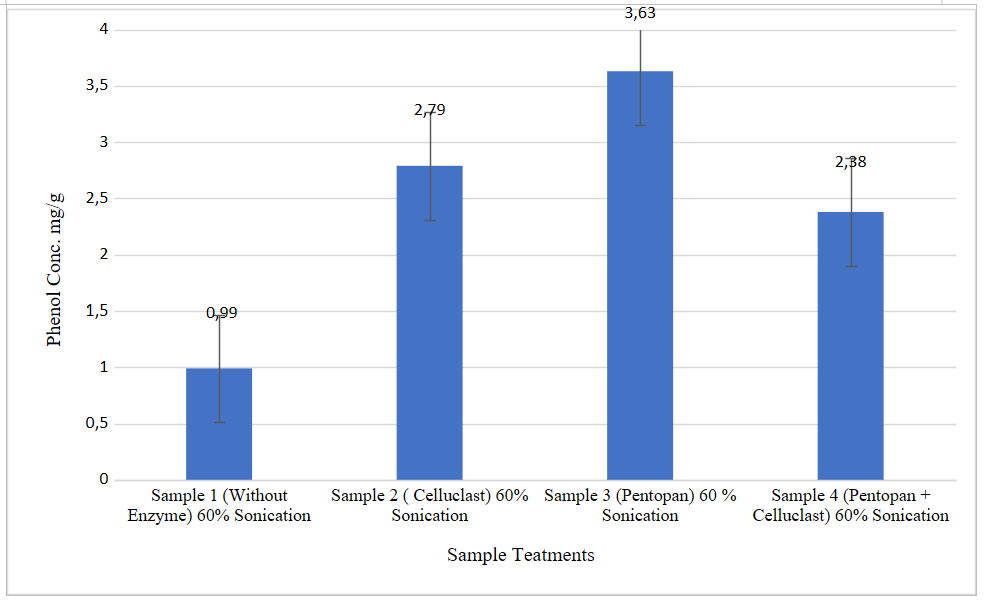
Graphical representation of total phenols in samples 1, 2, 3, 4
The total flavonoid content of the spent coffee grounds extracts differed among the treatments shown in the Fig. 3. Total Flavonoid Content (TFC) extraction from SCG was greatly enhanced by combining ultrasonication with enzymatic treatment (ANOVA F=13.67, p<0.0016). The maximum concentration (35.87±3.71 QE mg/L) was attained by Sample 4 (Pentopan + Celluclast), demonstrating a synergistic impact where the dual-enzyme strategy successfully broke down the lignocellulosic barrier to release flavonoids trapped inside the cellular matrix. The use of Sample 3 (Pentopan) alone (26.01±2.62 QE mg/L) proved statistically insignificant compared to the non-enzymatic control (p<0.1427), indicating that hemicellulose degradation alone is insufficient to liberate these particular bioactive compounds under ultrasonication conditions, even though Sample 2 (Celluclast) also demonstrated a significant increase over the control (31.81±4.44 QE mg/L, p<0.008). The inclusion of cellulase is essential for optimizing flavonoid recovery, shown by the statistical difference between Sample 3 and Sample 4 (p<0.0305). In conclusion, the switch from the control to the dual-enzyme treatment (Tukey groups a, ab, bc, and c) verifies that the combined enzymatic hydrolysis is the most effective method for optimizing the release of the flavonoid content, even though ultrasonication supplies the required physical priming via micro-fissures. The flavonoid concentrations in all SCG extracts were substantially lower than those reported for roasted coffee extracts (150 mg QE/L) .
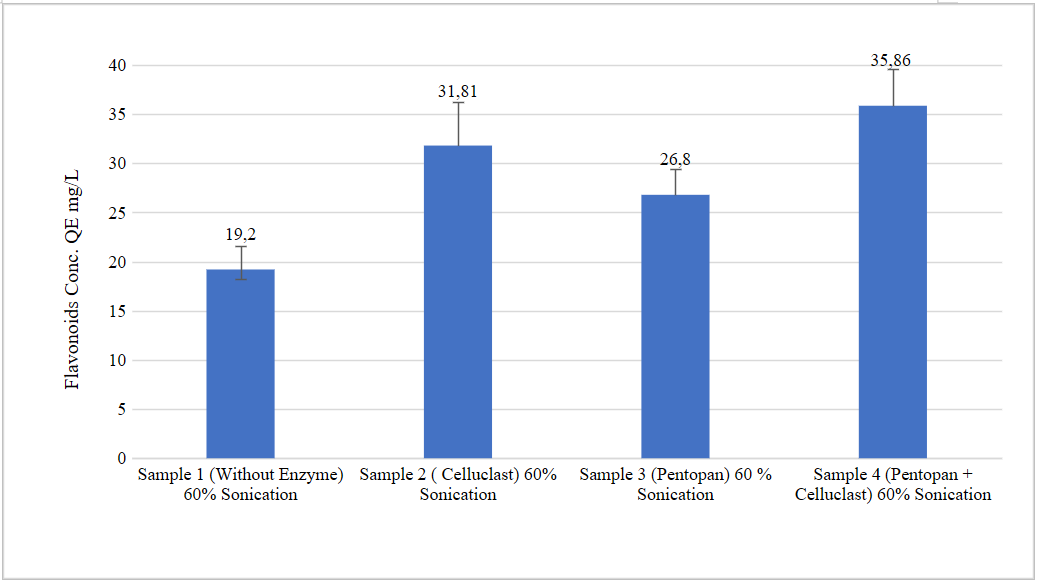
Graphical representation of TFC in samples 1, 2, 3, 4
The total antioxidant activity for samples is represented in the Fig. 4. Statistical comparison found a significant interaction between sonication and enzymatic treatment in terms of antioxidant activity (F = 47.96; p < 0.001), where some of these combinations resulted in decreased antioxidant activity compared to other treatment options. The sample showing the highest antioxidant activity was Sample 1 (Control) with a mean of 87.52 ± 0.51%. The second-highest mean value for antioxidant activity corresponded to Sample 3 (Pentopan-treated Extract) at 85.99 ± 1.56%. Since both Sample 1 and Sample 3 are members of the same statistical group, this shows that the application of Pentopan is effective as a preservative agent that protects the antioxidant capability of the extract; there is no statistically significant difference between Sample 1 (Control) and Sample 3 (Pentopan-treated Extract) (p<0.3636). The lowest level of antioxidant activity was associated with Sample 2 (Celluclast-treated Extract), with an average of 77.76 ± 0.70%. This indicates that the application of cellulase as an additional energy source during high-energy sonication can disrupt the cell wall structure, through which it allows greater access to antioxidants by increasing exposure to oxidative processes or degrading them using enzymes. Therefore, the bioactive potential of these compounds would be lessened. These values are comparable to the antioxidant activity reported for spent coffee grounds (86.3 ± 1.3%) . The control of the aqueous sonication demonstrated a base value of 87.52% DPPH scavenging activity, which compares to the 86.3-92.2% range of the conventional methanol extracts and confirms the high retention (>95) of antioxidants in spent coffee grounds . On the other hand, the antioxidant activities could be measured to be slightly lower with targeted enzymatic treatments (Celluclast: 77.75%; Pentopan: 85.99%; combination: 83.74%). This decrease is hypothesized to be due to protein-polyphenol interactions, in which liberated phenolics are bound to the structural enzymes and mask their reactive sites.
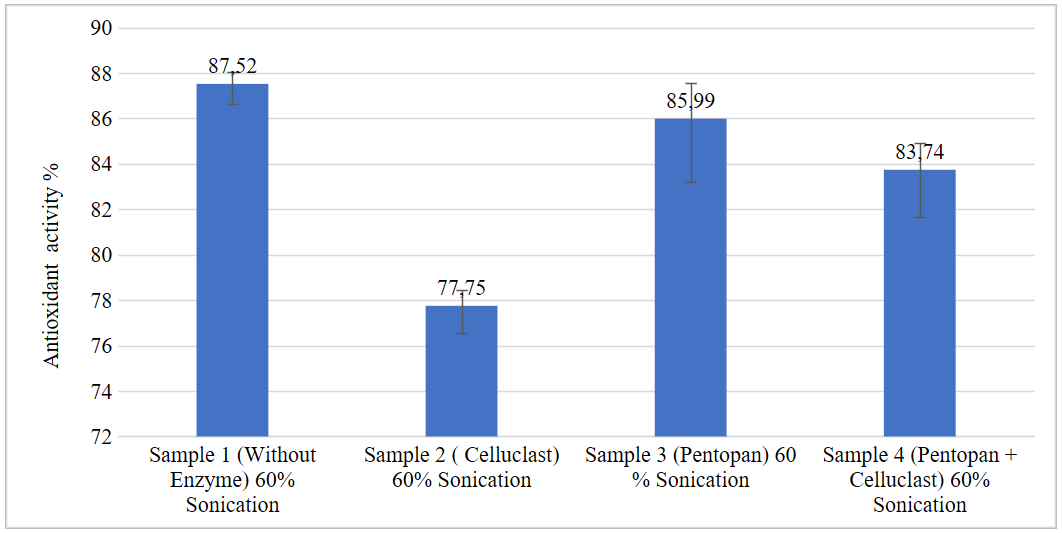
Graphical representation of antioxidant activity in SCG extracts
3.5. Total sugar concentration in SCG extracts
The total carbohydrate content of the spent coffee grounds extracts varied across the treatments as represented in the Fig. 5. The release of total sugars from the SCG matrix is considerably optimized when ultrasonication is paired with enzymatic hydrolysis, according to statistical analysis (F=239.45, p<0.001). The Tukey HSD results, in contrast to other measures, demonstrate that each treatment pair is statistically different (p<0.001), suggesting that every enzyme selection leads to a clear and quantifiable alteration in the breakdown of carbohydrates. The maximum yield (38.60±0.25 mg/L) was obtained by Sample 4 (Combo), which almost doubled the concentration of Sample 1 (Control) (20.23±1.27mg/L). While Sample 2 (Celluclast) successfully targeted cellulose (32.53±0.46 mg/L) and Sample 3 (Pentopan) targeted hemicellulose (27.06±1.09mg/L), their combination produced the most extensive cell wall breakdown, indicating a potent synergistic impact. The conversion of complicated polysaccharides into detectable free sugars is maximized by this dual-action strategy. Cellulose appears to be the main reservoir for sugar release in SCG under these acoustic settings, based on the notable difference between Celluclast (Sample 2) and Pentopan (Sample 3). It was reported that SCG’s enzyme hydrolysis resulted in the production of 15.3 mg/mL glucose and 10.6 mg/mL mannose , that the total carbohydrate content of the combined microwave-assisted extracts from SCG was 8.12 ± 0.5g. Whereas in literature cases where the ultimate goal is complete saccharification, the carbohydrate yields of the reaction can be in the tens of milligrams per milliliter (e.g., >25 mg/mL), in the present study maximum total sugar yield was deliberately lower (38.5 mg/L, or 0.0385 mg/mL). This variability shows the different aim of this methodology: the application of a mild 1:5 aqueous buffer and ultrasonication that aims to unlock hemicellulose-bound phenolics and others, but not the total and destructive liquefaction of the lignocellulosic matrix.
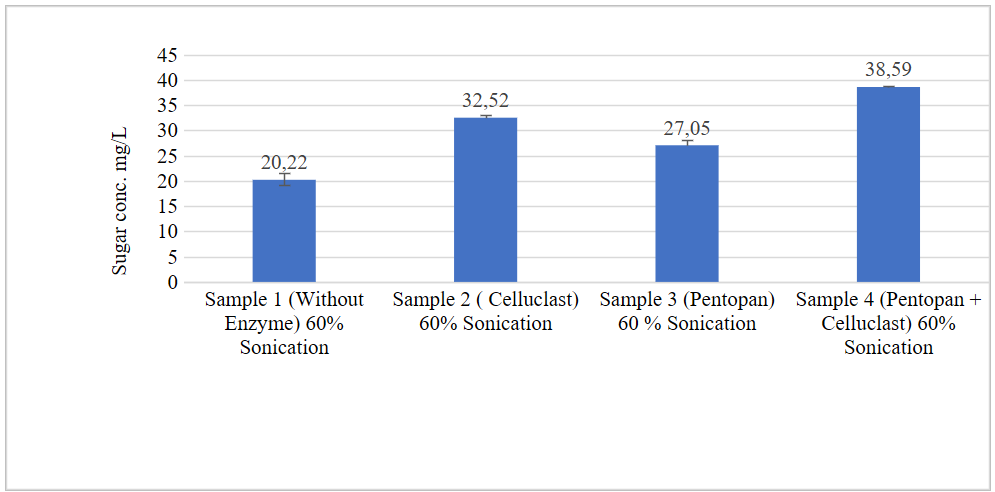
Graphical representation of carbohydrate concentration in SCG
3.6. Reducing sugar concentration in samples
The reducing sugar content of the spent coffee grounds extracts differed among the treatments. The combination of ultrasonication and enzymatic treatment is quite successful in removing Reducing Sugars from the SCG matrix, according to statistical analysis (F=5.02×10⁸, p<0.001). With a maximum concentration of 11.80±0.00 mg/L, Sample 4 (Combo) outperformed Sample 1 (Control) by over 3.5 times (3.40±0.00 mg/L). The simultaneous hydrolysis of cellulose and hemicellulose enhances the release of free carbonyl ends, demonstrating a potent synergistic impact. Four separate performance tiers (Tukey groups a, b, c, and d) were established by each treatment pair's high statistical significance (p<0.001). Sample 2 (Celluclast) at 5.20±0.00 mg/L was much inferior than Sample 3 (Pentopan) at 8.70±0.00 mg/L. This suggests that hemicellulose fraction degradation is more important than cellulose degradation alone for raising the reducing sugar yield at 40 kHz ultrasonication. These findings demonstrate that, under these particular acoustic settings, multi-enzymatic therapy is the best approach for optimizing carbohydrate recovery reported that the total reducing sugar content of the combined microwave-assisted extracts obtained from SCG was 1.5 ± 0.3 g/L. reported that the reducing sugar content of extracts obtained after supercritical fluid extraction ranged from 8.88 to 37.91 g/100 g of dried and defatted SCG. Whereas the other aggressive pretreatments used in the literature had given 17.4 mg of reducing sugars using 50 mg of SCG, but current experimental approach had given a maximum of 11.8 mg/L low concentrations are predetermined by three key factors: high solid-to-liquid ratio (1:5) (that is, limits mass transfer), the absence of harsh chemical/thermal pretreatments (that do not remove the structural armor), and the presence of a gentle aqueous buffer (as opposed to harsh organic solvents). Further, microwave pretreatment and the addition of thermostable endo-mannanase led to the generation of 62.3 mg of mannooligosaccharides out of 500 mg of SCG. In vitro experiments depicted that the mannooligosaccharides synthesized had prebiotic activity, which enhanced growth and biofilm formation of five probiotic bacterial strains .
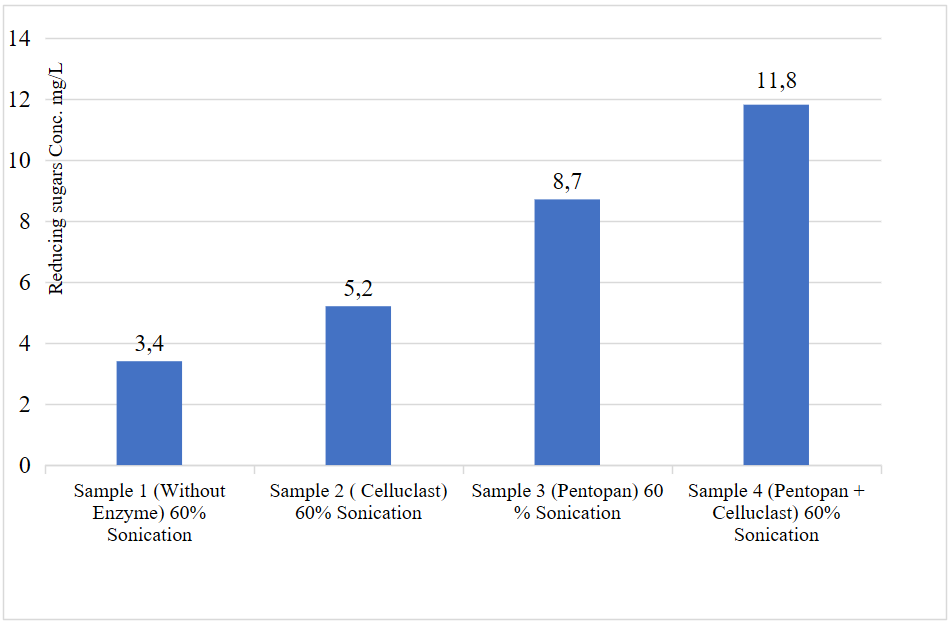
Graphical representation of reducing sugars conc. in samples
The degree of polymerized carbohydrates differed in the extracts of spent coffee grounds as represented in table 3. The Degree of Polymerization (DP) in SCG extracts was considerably determined by enzymatic treatment under ultrasonication, creating two different performance tiers, according to statistical analysis (F=205.24, p<0.001). The more effective "Short-Chain" tier (Tukey group b) consisted of Sample 3 (Pentopan) and Sample 4 (Combo), with DP values of 3.11±0.13 and 3.27±0.02, respectively.This demonstrated that the hemicellulose matrix was efficiently cleaved into short oligosaccharides by Pentopan (xylanase), which was the main cause of depolymerization. On the other hand, because the difference between Sample 1, 5.95±0.37 (Control) and Sample 2, 6.26±0.09 (Celluclast) was statistically negligible (p<0.323), they constituted the "Long-Chain" tier. The comparatively elevated DP in Sample 2 indicated that although Celluclast (cellulase) compromised the cellulose matrix, it probably liberated bigger structural fragments instead of accomplishing the extensive chain-shortening observed with xylanase. The lack of a notable difference between Samples 3 and 4 (p<0.736) indicated that xylanase predominance dictated the ultimate carbohydrate chain length, whereas cellulase offered no supplementary advantage to depolymerization under these particular acoustic settings. The structural analysis of the produced oligosaccharides showed that the targeted xylanase treatment (Sample 3; Pentopan) successfully broke down the spent coffee ground matrix to make short-chain oligosaccharides with a degree of polymerization (DP) of 3.11 ± 0.13. This is exactly in line with the DP 3–9 range that is best for highly active water-soluble dietary fibers according to the literature [46]. Previous studies necessitated either extreme thermal acid-catalyzed hydrolysis at 200 °C or intricate bottom-up enzymatic synthesis to achieve this specific structural profile [47]. In contrast, the current study achieved comparable macromolecular precision using a mild, eco-friendly 50 mM sodium citrate buffer combined with 60% sonication. Moreover, in vitro prebiotic assays utilizing Lactobacillus rhamnosus GG exhibited a direct correlation between this particular structural length and biological efficacy: the lowest-DP fractions from Sample 3 and Sample 4. The lowest-DP fractions from Sample 3 and Sample 4 (DP 3.27 ± 0.02) stimulated maximal probiotic proliferation, yielding 19.2 ± 5.8 and 19.0 ± 1.4 × 10⁸ CFU, respectively. These targeted enzymatic extracts worked better than both the higher-DP Celluclast fraction (DP 6.26 ± 0.09; 11.33 ± 1.45 × 10⁸ CFU) and the established commercial prebiotic standard, inulin (17.1 ± 1.5 × 10⁸ CFU). This proves that this gentle, low-temperature aqueous extraction method is a very effective and long-lasting way to turn coffee waste into powerful functional prebiotic ingredients.
Polymerization degree of carbohydrates in the sample
Samples | Degree of polymerization |
Sample 1 (Without Enzyme) 60% Sonication | 5.95±0.37 |
Sample 2 ( Celluclast) 60% Sonication | 6.26±0.09 |
Sample 3 (Pentopan) 60 % Sonication | 3.11±0.13 |
Sample 4 (Pentopan + Celluclast) 60% Sonication | 3.27±0.02 |
3.8. Probiotic Viable microbial count
The growth of Lactobacillus rhamnosus GG was different with the kind of carbon source that was utilized in MRS broth which is graphically represented in the Fig. 7. The effect of source of carbon, namely, the enzyme treated SCG extracts, was statistically significant (F=24.64, p<0.001), and hence, the growth of Lactobacillus rhamnosus was affected by the type of carbon source. The standard MRS (Sample F), which involved the use of simple glucose, gave the best environment as it had the highest number of cells (22.50×10⁸ CFU/mL). Nonetheless, two of the experimental prebiotics, namely MRS+S3 (Sample C) and MRS+S4 (Sample D) showed superior results, of 19.23×10⁸ and 19.03×10⁸ CFU/mL, respectively. Tukey HSD test also found that statistically, these two xylanase-based extracts were the same as MRS+Inulin (Sample E) (17.10×10⁸ CFU/mL), a known commercial prebiotic (p<0.396 and p<0.492, respectively). This confirms that the short-chain xylo-oligosaccharides that are produced during the hydrolysis of Pentopan are highly fermentable substrates of L. rhamnosus, and this closely resembles the prebiotic effect of well-known commercial products such as Inulin. In its turn, MRS+S2 (Sample B) led to the weakest growth (11.33×10⁸CFU/mL), which greatly underperformed in comparison to all other treatments, including non-enzymatic MRS+S1 (Sample A) (16.30x10⁸ CFU/mL, p<0.01). This is in line with previous studies about its elevated Degree of Polymerization (DP) and the possibility of the presence of inhibitory phenolic breakdown products, showing that cellulase treatment in such sonication conditions is a poorer carbon source to such a particular probiotic strain. Finally, the absence of a profound difference between MRS+S3, MRS+S4, and MRS+Inulin puts Pentopan-hydrolyzed SCG extracts as one of the most viable and sustainable alternatives to commercial prebiotics. Similar results were reported by Sharma et al., 2021 with 6.98 ± 1.09 log CFU/mL of Lactobacillus plantarum and 7.24 ± 1.98 log CFU/mL of Lactobacillus casei during 24 hours of incubation with SCG supplementation. The strong prebiotic effects of the SCG-derived oligosaccharides found in this study are in line with recent research that shows that SCG mannooligosaccharides (MOS) greatly improve the growth and colonization of probiotics. Previous studies by reported that they used harsh NaOH pretreatment and mannanase hydrolysis, and found that SCG MOS made physiological colonization markers much better than simple glucose controls. For example, Lactobacillus bulgaricus biofilm formation went from 0.94 ± 0.40 to 2.19 ± 0.44 OD, and its auto-aggregation went from 3.06 ± 0.19% to 18.21 ± 1.35% (with Bacillus subtilis auto-aggregation also going from 2.72 ± 0.23% to 20.98 ± 2.21%) . The deep functional improvements that have been reported in the literature are directly related to the in vitro cellular proliferation data that were found in this study for Lactobacillus rhamnosus GG. The specific aqueous enzyme-treated extracts (Sample 3 and Sample 4) promoted optimal probiotic proliferation, resulting in 19.2 ± 5.8 and 19.0 ± 1.4 × 10⁸ CFU, respectively. These gentle enzymatic treated SCG fractions did much better than the commercial prebiotic standard, inulin (17.1 ± 1.5 × 10⁸ CFU), and the baseline sonicated control (Sample 1; 16.3 ± 2.44 × 10⁸ CFU).
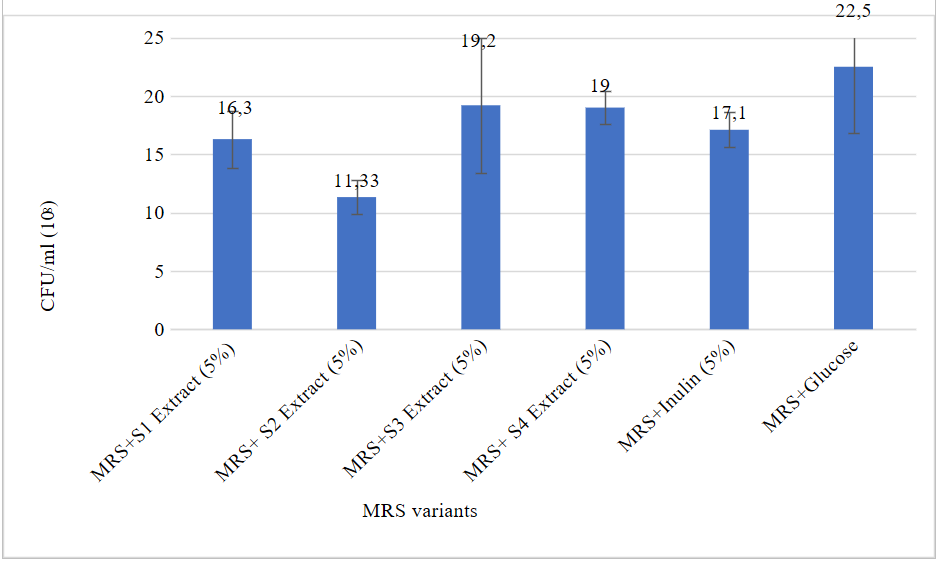
Graphical representation of CFU/ml (10⁸) in MRS broth variants
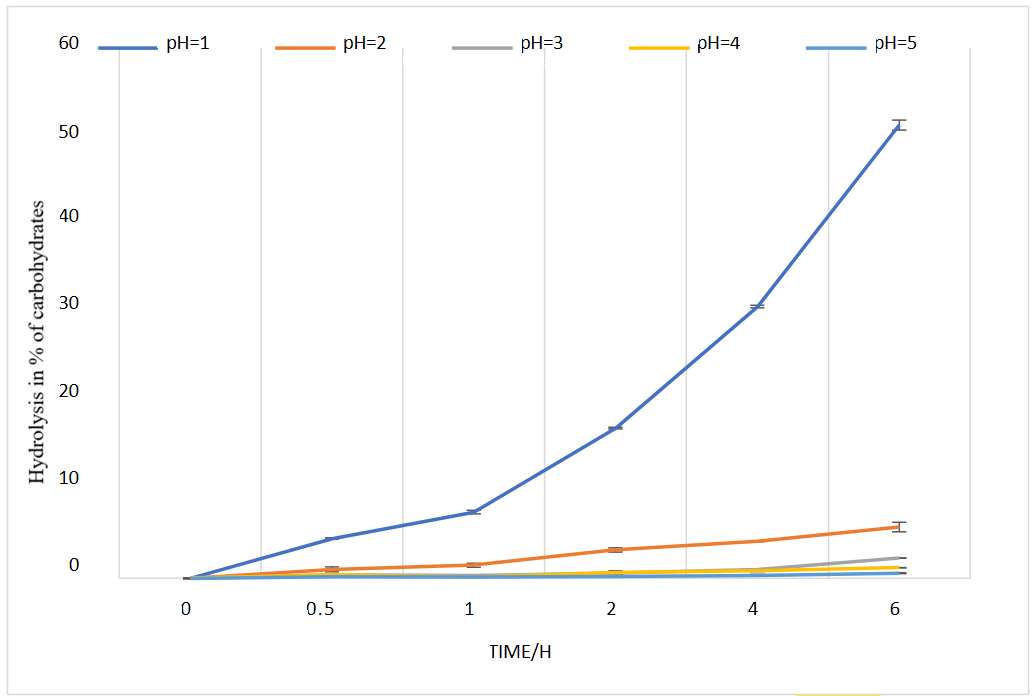
Percentage of hydrolysis of carbohydrates at different pH and time of the sample 3
Percentage of hydrolysis of carbohydrates at different pH and time of the Sample 3
Time (Hrs) | 0 | 0.5 | 1 | 2 | 4 | 6 |
pH=1 | 0 | 4.5±0.8 % | 7.49±0.2 | 17±0.1 | 30.74±0.1 | 51.3±0.5 |
pH=2 | 0 | 1±0.27 | 1.48±0.2 | 3.2±0.2 | 4.19±0.6 | 5.8±0.5 |
pH=3 | 0 | 0.38±0.04 | 1.48±0 | 0.56±0.1 | 0.97±02 | 2.3±0 |
pH=4 | 0 | 0.38±0.05 | 1.49±0.04 | 0.6±0.2 | 0.85±0 | 1.2±0 |
pH=5 | 0 | 0.18±0.2 | 1.48±0.04 | 0.22±0.2 | 0.36±0.1 | 0.6±0 |
The extent of hydrolysis of the used coffee grounds extract in artificial gastric conditions depended on pH and time of incubation. The maximum percentage of hydrolysis was recorded to be at a pH of 1.0 after 6 h, and the minimum hydrolysis was recorded at a pH of 5.0 after 0.5 h. The maximum percentage of hydrolysis was at pH 1.0 and was 4 h. All in all, no significant variations in hydrolysis were detected at pH 25-5 and incubation periods of 0.5-6 h, which means that the SCG carbohydrates are not that susceptible to gastric digestion.
Similar findings were observed by where the saccharides containing glucose (GCS) had extremely high resistance to artificial gastric juice in comparison to inulin with a non-digestible content of around 90 percent at a pH of 1.0. Minor differences in hydrolysis were only observed with the incubation period of 0-6 h in different pH levels, and the extent of hydrolysis was more at lower PH levels. This result lends credence to the low gastric digestibility and possible prebiotic activity of SCG-derived carbohydrates .
4. Conclusion
This study demonstrates that spent coffee grounds (SCG) can be successfully transformed into functional oligosaccharides using ultrasonic processing in combination with enzyme-based treatments. Use of enzymes Celluclast and Pentopan showed increased solubilization of soluble carbohydrate material, total phenol content, and flavonoid release; thus demonstrating the efficiency of the enzymes used in the treatment process in breaking down the lignocellulose structure and liberating bound bio-active compounds. Of all experimental conditions evaluated, it was found that the most optimal times of ultrasonic treatment, when followed by enzymatic treatment, gave rise to maximum levels of extractable carbohydrates and antioxidant activities. It appears that the structural breakdown of hemicellulosic components is a critical factor influencing phenolic release; whereas, the degree of polymerization of the newly formed oligo-sugars directly influences their functional properties. Additionally, the produced extracts were shown to have resistance against simulated gastrointestinal digestion and stimulated the growth of Lactobacillus rhamnosus GG, which suggests great potential for them to function as prebiotics. Overall, these results demonstrate that spent coffee grounds (a plentiful by-product from agro-food industries), may be converted into high-value products suitable for incorporation in functional foods. Future studies will need to include characterization of the chemical composition of the released compounds via additional analytical methods (i.e., HPLC, LC–MS, etc.) and a greater understanding of its prebiotic functionality through evaluation of multi-strain probiotics, gut models, and short-chain fatty acids (SCFAs). Moreover, scaling up the process and conducting techno-economic and lifecycle analyses will provide important information regarding the economic viability and environmental sustainability of converting SCGs into valuable added materials.